Dental X-Rays: Types, Uses, Safety & Cost Explained
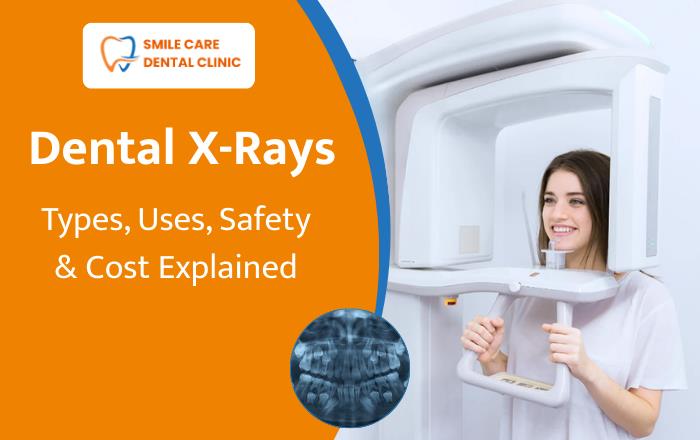
Ever wondered what your dentist actually sees when they take an X-ray of your teeth? You smile, they take a picture, but it's so much more than that. Dental X-rays are one of the most important tools in dentistry. They help your dentist spot problems that are completely invisible to the naked eye, such as hidden cavities, bone loss, infections, and more.
If you've ever felt nervous about dental X-rays or unsure whether they're safe, this guide is for you. We're breaking it all down in plain, simple language, no confusing medical jargon, just real information you can actually use.
What Are Dental X-Rays?
Dental X-rays (also called dental radiographs) are images taken of your teeth and jaw using a small amount of radiation. They give your dentist a clear look at what's happening beneath the surface of your gums and teeth.
Without dental X-rays, a dentist can only see about 30% of what's going on in your mouth. That means cavities forming between teeth, infections at the root, or early gum disease could go completely unnoticed until they become serious — and expensive problems.
Types of Dental X-Rays
There are several types of dental X-rays, and each one serves a different purpose:
- - Bitewing X-Rays are the most common type. They show the upper and lower back teeth side by side and are great for catching cavities between teeth and checking bone health.
- - Periapical X-Rays show the entire tooth from crown to root. Your dentist uses these when you have tooth pain or swelling to check for infections or abscesses.
- - Panoramic X-Rays (OPG) capture your whole mouth, all teeth, both jaws, and sinuses in one single image. These are used for wisdom tooth planning, braces, or getting a full overview of your oral health.
- - Occlusal X-Rays show the full arch of either your upper or lower teeth. They're often used for children to track tooth development.
- - Cone Beam CT (CBCT) is a 3D scan of your teeth, jaw, and bone. It's used for implant planning or complex dental cases and is typically found at larger or more equipped dental clinics.
What Can Dental X-Rays Detect?
Dental X-rays can detect far more than just cavities. Here's what they commonly help identify:
- Tooth decay between teeth or under fillings
- Gum disease and bone loss around teeth
- Impacted or unerupted wisdom teeth
- Jaw infections, cysts, or tumors
- Root fractures or abnormalities
- Developmental issues in children's teeth
Catching these problems early, before symptoms even appear, makes treatment simpler, faster, and far less costly.
Are Dental X-Rays Safe?
This is the question most patients ask, and the answer is yes, dental X-rays are very safe.
The radiation from a dental X-ray is incredibly small. A single bitewing X-ray exposes you to just 0.005 millisieverts (mSv) of radiation. To put that in perspective, you get more radiation from a short flight or even just spending a day outdoors in sunlight.
Dentists also follow a practice called the ALARA principle — meaning they use the lowest radiation dose possible and only take X-rays when truly needed. Lead aprons and thyroid collars are used as protection during the procedure.
- Are dental X-rays safe during pregnancy?Most dentists prefer to delay routine dental X-rays during pregnancy unless there's an urgent issue. Always let your dentist know if you're pregnant.
- Are dental X-rays safe for children? Yes. Children's dental X-rays use lower doses and help track tooth development and spot problems early. Modern digital X-ray machines make this even safer.
Digital vs. Traditional Dental X-Rays
If you're visiting a clinic that uses digital dental X-rays, that's a good sign. Digital technology uses up to 80% less radiation than old film-based X-rays, produces clearer images instantly, and doesn't require chemical processing.
Always feel free to ask your dentist what type of equipment they use. A good dentist will happily explain it to you.
How Often Should You Get Dental X-Rays?
It depends on your oral health:
- Healthy adults with no dental issues: Once every 1–2 years
- Adults with cavities, gum problems, or other risk factors: Every 6–12 months
- Children: Every 1–2 years based on cavity risk
- New patients: Usually a full set on your first visit
Your dentist will decide what's right for you based on your history and current oral health.
Dental X-Ray Cost in India
The cost of dental X-rays in India is quite affordable, especially when you think about how much money early detection can save you down the line. Prices vary depending on the type of X-ray your dentist recommends:
- A Periapical or Bitewing X-ray — the most common type, typically costs between ₹100 and ₹500.
- A Full Mouth X-Ray (FMX), which covers all your teeth at once, usually ranges from ₹800 to ₹2,000.
- A Panoramic X-ray (OPG), which gives a complete view of your jaws and teeth in one image, generally costs between ₹500 and ₹1,500.
- A Cone Beam CT (CBCT), the most detailed 3D scan used for implants or complex cases, can range from ₹3,000 to ₹8,000.
FAQ
Q1. Do dental X-rays hurt?
No, they are completely painless. The sensor inside your mouth may feel slightly uncomfortable for a second or two, but there's no pain involved.
Q2. Can I skip dental X-rays if I brush regularly?
Good brushing habits are great, but they can't help your dentist see what's happening between your teeth or under your gums. Dental X-rays provide information that simply can't be seen any other way.
Q3. How long does a dental X-ray take?
A single X-ray takes just seconds. A full set may take 15–20 minutes.
Visit Smile Care Dental Clinic for Dental X-Rays in Airoli
If you're in Airoli, Navi Mumbai, and looking for a trusted place to get your dental X-ray, visit Smile Care Dental Clinic — led by Dr. Umesh Tambe, who brings over 18+ years of experience in dental care.
Dr. Tambe and his team use digital X-ray technology and take the time to explain your results clearly so you always know what's happening with your oral health.
📍 Book your dental X-ray appointment at Smile Care Dental Clinic, in Airoli today — and take the first step toward a healthier smile.
Designed & Developed by DMX Digital Google Partner