Enamel Erosion – Symptoms, Causes, Treatment
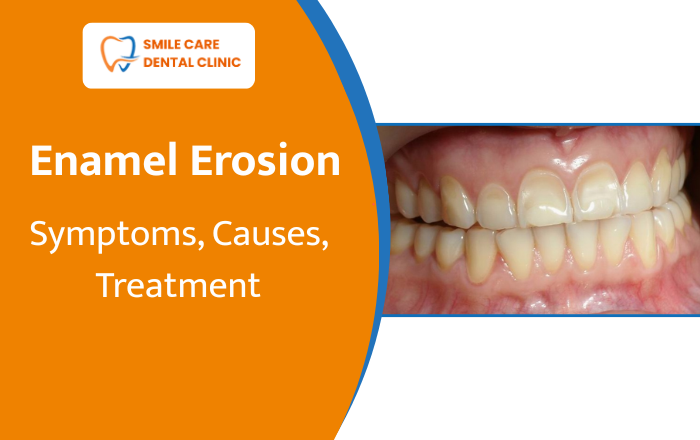
Learn enamel erosion symptoms, causes, treatment, and prevention tips to protect teeth from sensitivity, decay, and damage. The good news is, if you catch it early, you can protect your smile before things get serious. Let's break it all down in simple terms.
What Is Tooth Enamel And Why Does Losing It Matter?
Enamel is the hard outer layer that covers your teeth. It acts like a protective shell, guarding against heat, cold, pressure, and bacteria every single day. Here's the part that surprises most people: enamel erosion cannot be undone. Unlike other tissues in your body, enamel has no living cells, so once it wears away, it doesn't grow back. That's why understanding and preventing tooth enamel erosion early makes such a big difference.
7 Symptoms of Enamel Erosion You Shouldn't Ignore
Tooth enamel erosion often starts quietly. By the time it becomes painful, a fair amount of damage has already happened. Watch out for these signs:
- 1. Tooth sensitivity — sharp pain when eating hot, cold, or sweet foods
- 2. Yellowing teeth — as enamel thins, the yellowish dentin underneath starts to show
- 3. Rounded or smooth teeth — edges lose their natural shape over time
- 4. Transparent tips — front teeth may look see-through at the edges
- 5. Cracks or chips —teeth become more brittle as the enamel weakens
- 6. Small dips on the tooth surface — also called "cupping," these are tiny craters that form on the biting surface
- 7. Increasing pain — even without eating or drinking anything, discomfort may linger
If two or more of these sound familiar, it's time to speak to a dentist sooner rather than later.
What Causes Enamel Erosion? (You Might Be Surprised)
Acidic Foods and Drinks
The biggest culprit behind enamel erosion is acid. Sodas, energy drinks, fruit juices, citrus fruits, and pickled foods are all highly acidic. A regular can of soda has a pH close to 2.5 — acidic enough to soften enamel with repeated exposure. Frequent snacking also keeps the mouth in an acidic state for longer, giving enamel little time to recover.
Medical Conditions
Certain health issues directly contribute to tooth enamel erosion:
- Acid reflux (GERD): Stomach acid travels up and reaches the mouth, slowly dissolving enamel from the inside out
- Eating disorders: Frequent vomiting exposes teeth to strong stomach acids
- Dry mouth: Saliva naturally neutralizes acid — less saliva means more erosion risk
Everyday Habits
Sometimes the damage comes from daily routines you wouldn't think twice about, such as brushing too hard, using a hard-bristled toothbrush, grinding teeth at night, or brushing immediately after eating acidic food.
Can Enamel Erosion Be Reversed?
This is one of the most searched questions about enamel erosion and the honest answer is: not fully. Once enamel is gone, it cannot grow back. However, in the very early stages, a process called remineralization can help strengthen weakened enamel before full erosion sets in. Using fluoride toothpaste, staying hydrated, and eating calcium-rich foods can all support this process.
Treatment Options for Enamel Erosion
Depending on how far the enamel erosion has progressed, your dentist may recommend:
1. Fluoride Therapy
For early-stage erosion, in-office fluoride treatments or prescription-strength fluoride toothpaste can help slow the process and strengthen what's left.
2. Dental Bonding
A tooth-colored resin is applied to the damaged area to restore shape and reduce sensitivity. It's a simple, effective option for mild to moderate enamel erosion treatment.
3. Porcelain Veneers
For more visible damage, especially on front teeth, veneers offer both protection and a natural appearance.
4. Dental Crowns
When erosion has severely weakened a tooth, a crown may be needed to cover and protect the remaining structure.
How to Prevent Enamel Erosion — Starting Today
Prevention is always easier than treatment. Here are practical steps to protect your enamel:
- Wait at least 30 minutes before brushing after eating acidic foods
- Use a soft-bristled toothbrush and gentle pressure
- Drink water throughout the day to support saliva production
- Cut back on sodas, juices, and energy drinks
- Eat more calcium-rich foods like dairy, almonds, and leafy greens
- Use a straw when drinking acidic beverages
- Address teeth grinding with a night guard if needed
- Visit your dentist regularly for early detection
Book Your Visit at Smile Care Dental Clinic, Airoli
If you've noticed any symptoms of enamel erosion, sensitivity, yellowing, or changes in your tooth shape, don't wait for the pain to get worse. Early action can save your teeth and your pocket.
Visit Smile Care Dental Clinic in Airoli, led by Dr. Umesh Tambe for a thorough check-up and honest guidance on the best steps for your smile. Whether it's early-stage enamel erosion treatment or restoring already-damaged teeth, Dr. Tambe and his team are ready to help you feel confident about your dental health again.
Book your appointment today - your enamel is worth protecting.
Name - Smile Care Dental Clinic & Implant Center
Address - opposite Airoli rlwy stn.( one road, Sector 3 Airoli Rd, behind lifeline hospital, near Bloom Maternity Hospital, Navi Mumbai, Maharashtra 400708
Contact No. - 98694 31739
FAQs About Enamel Erosion
Q1: Can enamel erosion be reversed naturally?
Not fully. Once lost, enamel doesn't grow back, but early-stage weakening can be slowed with fluoride and good habits.
Q2: Is enamel erosion the same as a cavity?
No. Cavities are caused by bacteria in one spot. Enamel erosion is acid-driven and can affect wider areas across multiple teeth.
Q3: What is the best toothpaste for enamel erosion?
Look for fluoride toothpaste or one containing hydroxyapatite. Avoid harsh whitening formulas if erosion is already present.
Q4: Can children get enamel erosion?
Yes, children who regularly consume fruit juices or sodas are at risk. Building good habits early goes a long way.
Have questions? We’re just a message away! Contact us on WhatsApp — Click Here to Chat with Us
Designed & Developed by DMX Digital Google Partner