What Happens If Gum Disease Is Left Untreated?
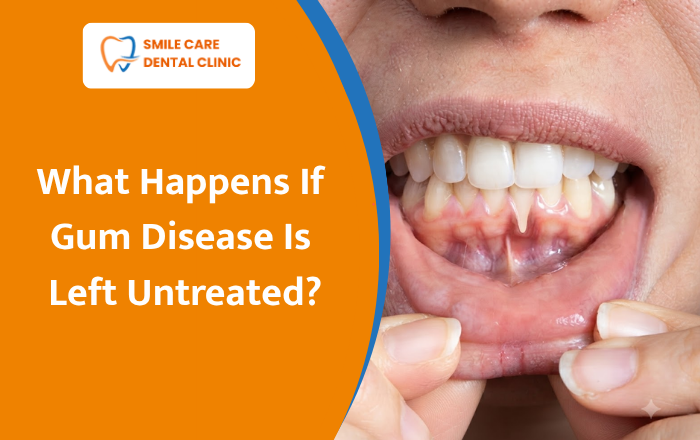
Gum disease is a common dental problem that can start with mild gum bleeding and gradually become more serious if ignored. Many people notice blood while brushing, swollen gums, or persistent bad breath but assume these problems will go away on their own. However, these symptoms may indicate an infection or inflammation that needs dental attention.
Leaving gum disease untreated can damage the tissues supporting your teeth. In more advanced cases, it may lead to gum recession, bone loss, loose teeth, and even tooth loss. The good news is that early diagnosis and appropriate treatment can help control the condition and protect your oral health.
Understanding the warning signs of gum disease can help you seek treatment before the problem becomes more difficult to manage.
What Is Gum Disease?
Gum disease, also known as periodontal disease, is an inflammatory condition that affects the gums and the tissues supporting the teeth. It usually develops when plaque, a sticky layer of bacteria, builds up around the teeth and along the gumline.
When plaque is not removed properly through brushing and cleaning between the teeth, it can harden into tartar. Tartar cannot be removed with ordinary brushing and generally requires professional dental cleaning.
Gum disease usually develops in two main stages:
1. Gingivitis
Gingivitis is the early stage of gum disease. The gums may become red, swollen, tender, or bleed during brushing and flossing. At this stage, the damage is generally reversible with proper oral hygiene and professional cleaning when needed.
2. Periodontitis
If gingivitis is not treated, it can progress to periodontitis. This more serious condition affects the supporting tissues and bone around the teeth. As the disease progresses, the gums may pull away from the teeth, creating pockets where bacteria can collect.
The damage caused by periodontitis may not be fully reversible, but appropriate treatment can help control the disease and reduce further damage.
Early Signs of Gum Disease You Should Not Ignore
Gum disease does not always cause pain in its early stages. This is one reason people may delay visiting a dentist.
Watch for these common warning signs:
- Bleeding gums: Blood while brushing or cleaning between your teeth can indicate gum inflammation.
- Red or swollen gums: Healthy gums generally appear firm and do not remain swollen or tender.
- Persistent bad breath: An unpleasant smell or taste that continues despite regular brushing may be related to bacteria around the gums.
- Gum tenderness: Your gums may feel sore when brushing or eating.
- Gum recession: Your teeth may begin to look longer as the gumline moves downward or away from the teeth.
- Changes in how teeth fit together: Advanced gum disease can affect tooth stability and the way your teeth meet when you bite.
If you notice these symptoms repeatedly, arrange a dental examination rather than waiting for pain to develop.If you notice these symptoms repeatedly, arrange a dental examination rather than waiting for pain to develop.
What Happens If Gum Disease Is Left Untreated?
Untreated gum disease can gradually damage the structures that keep your teeth stable. The speed and severity of progression vary from person to person, but several complications may develop.
1. Persistent Gum Inflammation and Bleeding
In the early stages, bacteria around the gumline trigger inflammation. Your gums may bleed during brushing, appear red, or feel swollen.
If plaque continues to accumulate, the inflammation may persist or worsen. Brushing more gently may reduce irritation caused by excessive force, but it will not remove the underlying cause if plaque or tartar remains.
Professional evaluation helps determine whether the bleeding is due to gingivitis, periodontitis, or another problem.
2. Gum Recession and Exposed Tooth Roots
As gum disease progresses, the gum tissue may move away from the teeth. This is called gum recession.
When the roots become exposed, you may notice:
- Increased sensitivity to hot and cold foods
- Teeth appearing longer than before.
- Greater difficulty keeping certain areas clean.
- Increased risk of root-surface decay.
Gum recession can also occur due to aggressive brushing, thin gum tissue, and other factors. A dentist can identify the likely cause and recommend suitable care.
3. Bone Loss Around the Teeth
Your teeth are supported by the jawbone and surrounding tissues. In periodontitis, the inflammation associated with the disease can gradually destroy the bone supporting the teeth.
Bone loss is particularly concerning because it may occur without obvious pain. As the supporting bone decreases, teeth can become less stable.
Early treatment is important because lost supporting bone does not usually grow back through routine gum treatment alone. In selected cases, a periodontal specialist may consider regenerative procedures.
4. Loose or Shifting Teeth
When gum disease damages the tissues and bone supporting your teeth, the teeth may begin to feel loose or shift position.
When gum disease damages the tissues and bone supporting your teeth, the teeth may begin to feel loose or shift position.
Loose teeth can also result from trauma or other dental conditions, so a proper examination is necessary to identify the cause.
5. Tooth Loss
Tooth loss is one of the possible consequences of advanced periodontitis. When too much supporting tissue and bone are destroyed, a tooth may no longer remain stable enough to function properly.
However, not every case of gum disease leads to tooth loss. Gingivitis can often be reversed, and periodontitis can frequently be managed with suitable treatment and ongoing maintenance.
The earlier the disease is identified, the better the opportunity to protect the remaining supporting tissues.
6. Gum Abscess and Localised Infection
In some cases, a periodontal infection can lead to a gum abscess, which is a collection of pus associated with an infected area.
Possible symptoms include localised swelling, pain, pus, a bad taste, or tenderness when chewing. An abscess needs prompt dental attention because it may require drainage and treatment of the underlying infection.
Facial swelling, fever, or difficulty swallowing or breathing requires urgent medical assessment.
7. Possible Links With General Health
Research has found associations between periodontitis and certain health conditions, including diabetes and cardiovascular disease. Diabetes can make gum disease harder to control, while severe gum inflammation may also affect blood sugar management.
However, an association does not prove that gum disease directly causes every related condition. Maintaining gum health is an important part of overall healthcare, especially for people managing diabetes.
How Is Gum Disease Treated?
Treatment depends on how advanced the gum disease is and how much damage has occurred.
Professional Dental Cleaning
For gingivitis and plaque-related gum inflammation, a dentist may recommend professional cleaning to remove plaque and tartar. Regular brushing and cleaning between the teeth are essential to maintain the results.
Scaling and Root Planing
For periodontitis, a dentist or periodontist may recommend deep cleaning, also called scaling and root planing. This procedure removes plaque and tartar from below the gumline and smooths the affected root surfaces to support gum healing.
Additional Periodontal Treatment
If deeper gum pockets or infection persist, further treatment may be required. Depending on the condition, options may include periodontal surgery, selected regenerative procedures, or other specialist care.
Teeth that are severely damaged or have very poor support may need additional treatment, and extraction may sometimes be necessary.
Following treatment, regular periodontal maintenance appointments help monitor gum health and reduce the risk of recurrence.
How Can You Prevent Gum Disease From Getting Worse?
Good daily habits can reduce plaque buildup and help protect your gums.
- Brush twice daily with a soft-bristled toothbrush and fluoride toothpaste.
- Clean between your teeth every day using dental floss or appropriately sized interdental brushes.
- Avoid smoking or tobacco use, which can increase the risk of gum disease and affect healing.
- Limit frequent sugary snacks and maintain a balanced diet.
- Attend regular dental check-ups and professional cleanings as advised.
- Manage diabetes with appropriate medical guidance if you have the condition.
- Do not ignore bleeding gums, persistent bad breath, or gum swelling.
Mouthwash may be useful in some situations, but it should not replace brushing, interdental cleaning, or professional treatment.
When Should You Visit a Dentist?
Book a dental appointment if you regularly experience bleeding gums, swelling, persistent bad breath, gum recession, or discomfort while chewing. You should also seek an examination if your teeth feel loose or your bite has changed.
Seek prompt dental care for pus around the gums, a painful swelling, or a suspected gum abscess. If swelling spreads to your face or neck, or you have difficulty swallowing or breathing, seek emergency medical care.
During an examination, your dentist may assess gum inflammation, measure the spaces between your gums and teeth, and recommend dental X-rays when necessary to check for bone loss.
You do not need to wait until your gums hurt before seeking advice. Early assessment can help identify the problem and determine the most suitable treatment.
Frequently Asked Questions About Gum Disease
Q1. Can gum disease go away on its own?
Gum disease generally does not resolve reliably without addressing the cause. Early gingivitis can often be reversed with good oral hygiene and professional cleaning when needed. Periodontitis requires appropriate dental treatment and ongoing maintenance.
Q2. Does bleeding while brushing always mean gum disease?
No. Bleeding gums can be caused by gingivitis, brushing too hard, certain medications, or other conditions. However, repeated bleeding should be evaluated by a dentist rather than ignored.
Q3. How long does gum disease take to become serious?
There is no fixed timeline. Progression depends on factors such as oral hygiene, smoking, diabetes, individual susceptibility, and the severity of inflammation. Some cases progress slowly, while others may worsen more quickly.
Get Your Gum Health Checked
Bleeding gums, persistent bad breath, and gum recession may seem like minor concerns, but they can sometimes be early signs of a more serious dental problem. Getting the right diagnosis can help you understand the condition and take steps to protect your teeth.
For an evaluation of your gum health, you can consult Smile Care Dental Clinic & Implant Center, led by Dr. Umesh Tambe,who has over 19+ years of experience. The clinic is located in Airoli, Navi Mumbai, and can assess your symptoms and advise you on suitable next steps.
Clinic: Smile Care Dental Clinic & Implant Center
Address: Opposite Airoli Railway Station, One Road, Sector 3, Airoli Road, behind Lifeline Hospital, near Bloom Maternity Hospital, Navi Mumbai, Maharashtra – 400708
Phone: 98694 31739
Designed & Developed by DMX Digital Google Partner