What is Bruxism? Signs, Causes, and Treatment Options
Are You Grinding Your Teeth Without Knowing It?
Have you ever woken up with a sore jaw or a headache? Do your teeth feel sensitive for no clear reason? If so, you might be dealing with bruxism, a common condition where people grind or clench their teeth, often without realizing it.
Bruxism can happen while you’re awake or asleep and may cause tooth damage, jaw pain, and sleep disturbances. Many people ignore the signs until they experience severe discomfort. The good news is that once you understand the causes and symptoms, there are ways to manage and reduce the habit.
In this blog, we’ll explore what bruxism is, why it happens, how to treat it, and when to visit a dentist for professional help.
What is Bruxism?
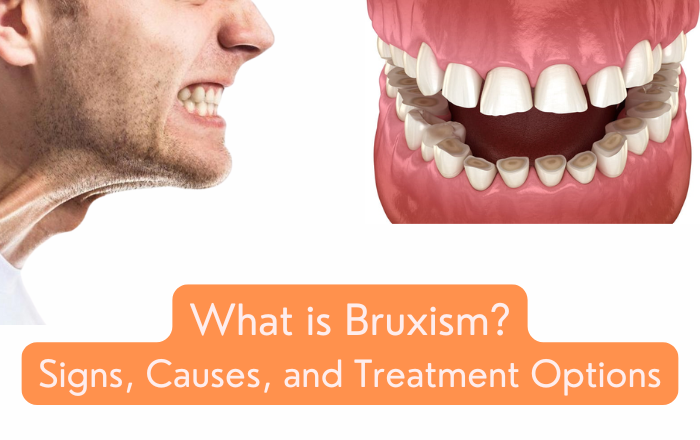
Bruxism is the habit of grinding, clenching, or gnashing teeth. It can happen at night (sleep bruxism) or during the day (awake bruxism). Some people clench their teeth due to stress, while others grind their teeth in their sleep without knowing it.
Types of Bruxism:
- Sleep Bruxism: Occurs while sleeping and is often linked to sleep disorders like snoring or sleep apnea.
- Awake Bruxism: This happens when a person unconsciously grinds or clenches their teeth during the day, usually due to stress or concentration.
If left untreated, bruxism can lead to worn-down teeth, jaw disorders, and discomfort in the neck and face.
Signs and Symptoms of Bruxism
Bruxism doesn’t always cause noticeable symptoms at first. However, over time, it can lead to:
- Jaw pain or tightness (especially in the morning)
- Headaches (especially in the temples)
- Tooth sensitivity or pain
- Chipped, flattened, or worn-down teeth
- Ear pain or ringing in the ears (tinnitus)
- Disrupted sleep (for both the person and their partner)
Some people only realize they grind their teeth when their dentist notices wear and tear on their teeth during a check-up.
What Causes Bruxism?
There’s no single cause of bruxism, but several factors can increase the risk.
Common Triggers:
- Stress and Anxiety: Many people clench their teeth when they’re anxious or under pressure.
- Sleep Disorders: People with sleep apnea, snoring, or other sleep issues are more likely to grind their teeth.
- Teeth Alignment Issues: An improper bite or misaligned teeth can cause discomfort, leading to grinding.
- Lifestyle Habits: Smoking, drinking alcohol, high caffeine intake, and recreational drug use can increase bruxism.
- Medications: Certain antidepressants and stimulants may cause teeth grinding as a side effect.
- Genetics: Bruxism can run in families, meaning if your parents grind their teeth, you might too.
How is Bruxism Diagnosed?
A dentist can detect bruxism by examining your teeth, gums, and jaw muscles. They might look for signs of enamel wear, fractures, or jaw tenderness.
In some cases, a sleep study may be needed to check if bruxism is linked to sleep apnea. If you wake up with pain or your partner notices you grinding your teeth at night, it’s a good idea to discuss it with your dentist.
Treatment Options for Bruxism
The right treatment depends on the severity of the condition and its underlying cause.
1. Home Remedies and Lifestyle Changes
✔️ Manage Stress: Relaxation techniques like meditation, deep breathing, or yoga can reduce teeth grinding.
✔️ Limit Stimulants: Reduce caffeine and alcohol, especially in the evening.
✔️ Jaw Exercises: Simple stretches can help relax the muscles and reduce tension.
✔️ Apply a Warm Compress: A warm cloth on the jaw before bed can ease tightness.
2. Dental Treatments
✔️ Mouthguards and Splints: Wearing a custom-made mouthguard at night can protect teeth from grinding.
✔️ Correcting Bite Issues: If misaligned teeth are causing bruxism, braces or other dental treatments may help.
3. Medical Treatment
✔️ Muscle Relaxants: In some cases, a doctor may prescribe medications to relax the jaw muscles at night.
✔️ Therapy for Stress-Related Bruxism: If grinding is due to anxiety, cognitive behavioral therapy (CBT) may be helpful.
How to Prevent Bruxism?
- Practice Good Sleep Habits: A regular sleep routine can reduce stress and improve sleep quality.
- Avoid Chewing on Non-Food Items: Gum, pens, or fingernails can encourage clenching.
- Stay Hydrated: Dehydration can make muscle tension worse.
- Be Aware of Daytime Clenching: If you catch yourself clenching during the day, make a habit of relaxing your jaw.
When to See a Dentist for Bruxism?
If you notice:
✔️ Frequent jaw pain or headaches
✔️ Worn-down or damaged teeth
✔️ Increased tooth sensitivity
✔️ Disrupted sleep due to grinding
It’s time to consult a dentist. Ignoring bruxism can lead to severe tooth damage, gum problems, and jaw disorders. A dentist can help determine the best solution for your needs.
Bruxism Treatment at Smile Care Dental Clinic, Airoli
If you’re experiencing teeth grinding or jaw pain, visiting a dentist can help you find relief.
Dr. Umesh Tambe, a trusted dentist in Airoli, offers care for bruxism atSmile Care Dental Clinic. Whether you need a mouthguard, dental treatment, or guidance on managing teeth grinding, professional advice can protect your smile.
Protect Your Teeth – Take Steps to Stop Bruxism Today!
Bruxism can be painful and damaging, but it’s manageable with the right approach. If you think you’re grinding your teeth, don’t ignore the signs. Simple changes and dental care can protect your teeth and improve your comfort.
For expert guidance, visit Dr. Umesh Tambe at Smile Care Dental Clinic in Airoli—your smile deserves the best care!
Designed & Developed by DMX Digital Google Partner