White Spot on a Tooth: Is It Decay, Fluorosis or Enamel Damage?
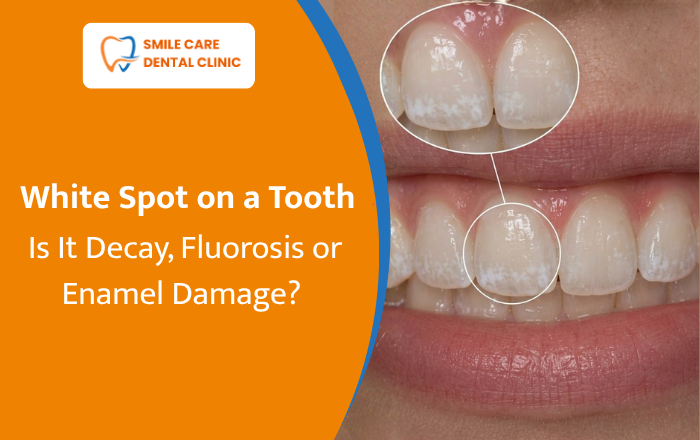
Noticing a white spot on a tooth can be confusing. You may wonder if it is a sign of tooth decay, a cosmetic change, or damage to the enamel. While some white spots are harmless, others can indicate changes in the tooth that may need dental attention.
The appearance, location, texture, and history of the white spot can help identify its possible cause. Common reasons include early tooth decay, dental fluorosis, enamel damage, and enamel hypoplasia.
What Does a White Spot on a Tooth Mean?
A white spot on a tooth usually means that the affected area looks different from the surrounding enamel. This can happen when the mineral content or structure of the enamel changes.
A white spot does not automatically mean you have a cavity. For example, fluorosis may cause white marks that have been present for many years, while early tooth decay can also appear as a chalky white area.
Because several conditions can look similar, a dentist may need to examine the tooth closely to determine the cause.
Common Causes of White Spots on Teeth
Some of the most common causes of white spots on teeth include:
- Early tooth decay: Loss of minerals from the enamel can create a dull or chalky white patch.
- Dental fluorosis: Excess fluoride exposure while teeth are developing can cause white lines, spots, or patches.
- Enamel damage: Acidic foods, drinks, poor oral hygiene, or other factors can affect the enamel surface.
- Enamel hypoplasia: The enamel may develop thinner or weaker than normal, sometimes leaving visible white or discoloured areas.
- Previous dental or developmental changes: Some spots may have developed while the tooth was forming.
The cause is important because treatment depends on what is happening inside or on the surface of the tooth.
White Spots From Early Tooth Decay
White spots can sometimes be one of the earliest visible signs of tooth decay. At this stage, the enamel may lose minerals without having developed into a noticeable cavity.
These areas may look:
- Chalky or opaque
- Dull compared with the surrounding enamel
- More noticeable after the tooth dries
- Located near the gumline or in areas where plaque tends to collect
Early tooth decay does not always cause pain. This is why waiting for a toothache before seeing a dentist is not ideal.
If detected early, a dentist can assess the extent of enamel changes and recommend steps to prevent the decay from progressing.
Dental Fluorosis
Dental fluorosis occurs when a person is exposed to too much fluoride while permanent teeth are developing, usually during childhood.
Mild fluorosis may appear as faint white lines, spots, or patches. In more noticeable cases, the teeth may have brownish discoloration or changes in the enamel surface.
One important difference is that fluorosis generally develops before the teeth erupt. Therefore, if a new white spot suddenly appears on an adult tooth, fluorosis is less likely to be the explanation.
Enamel Damage or Enamel Hypoplasia
The enamel is the hard outer layer of a tooth. When it becomes weakened or does not develop normally, white marks or other changes in appearance may occur.
Enamel hypoplasia means the enamel did not develop to its normal thickness or structure. It can affect one tooth or several teeth and may be related to factors that occurred while the teeth were developing.
Enamel damage can also occur later due to factors such as frequent exposure to acids or certain habits. Depending on the cause and severity, these changes may be temporary, manageable, or permanent.
How Can You Tell the Difference?
It can be difficult to distinguish between white spots on teeth caused by decay, fluorosis, or enamel changes simply by looking in the mirror.
A dentist may consider:
- When the spot appeared: A spot present since childhood may suggest a developmental cause.
- Where it is located: The position and pattern can provide useful clues.
- Its appearance: Colour, shape, and whether the area looks chalky or smooth can help.
- The condition of the enamel: A dentist can check whether the surface is intact or weakened.
- Your dental history: Diet, oral hygiene, fluoride exposure, previous illness, and dental treatment may be relevant.
An examination is especially important if the spot is new, becoming larger, rough, sensitive, or associated with other changes.
When Should You See a Dentist?
A white spot may not always require urgent treatment, but it should not be ignored if you are unsure about its cause.
Consider scheduling a dental examination if:
- The white spot has appeared recently.
- It is getting larger or changing in appearance.
- The tooth feels sensitive or painful.
- The surface feels rough, soft, or uneven.
- You notice several new white spots.
- You are concerned that it could be early tooth decay.
Early assessment can help identify problems before they become more extensive.
Treatment for White Spots on Teeth
There is no single treatment for all white spots. The appropriate option depends on the underlying cause.
Depending on the diagnosis, a dentist may recommend:
- Improved brushing and fluoride-based oral care
- Dietary changes to reduce frequent acid exposure
- Fluoride treatment when appropriate
- Treatment to manage early tooth decay
- Cosmetic procedures for certain persistent spots
- Monitoring when the spots are harmless and do not require treatment
Some white spots can be improved cosmetically, while others may remain visible. A dentist should first determine the cause before choosing a treatment.
FAQs About White Spots on Teeth
Q1. What causes a white spot on a tooth?
A white spot can result from early tooth decay, dental fluorosis, enamel damage, enamel hypoplasia, or other changes in enamel development. The appearance alone cannot always identify the cause, so a dental examination may be needed.
Q2. Is a white spot on a tooth always a sign of decay?
No. White spots are not always caused by tooth decay. Fluorosis, enamel hypoplasia, and other enamel changes can also produce white marks. However, a new chalky white area can sometimes indicate early decay and should be assessed if you are concerned.
Q3. How can I tell the difference between fluorosis and tooth decay?
Fluorosis usually develops while permanent teeth are forming and often affects teeth in a more symmetrical or patterned way. Early decay commonly develops where plaque collects and may appear as a localized chalky area. A dentist can distinguish between them more accurately.
Concerned About White Spots on Your Teeth? Get a Dental Evaluation
A white spot on a tooth can have several causes, and it is not always a cavity. Early tooth decay, dental fluorosis, enamel damage, and enamel hypoplasia can all produce changes that look similar.
If you have a persistent or unexplained white spot, getting it examined is the safest way to understand what is causing it and whether treatment is necessary.
For a dental evaluation in Airoli, Navi Mumbai, you can consult Smile Care Dental Clinic, led by Dr. Umesh Tambe who has 18+ years of experience. A professional examination can help determine whether the white spot needs treatment, monitoring, or simply reassurance.
If your white spot is persistent, changing, painful, or causing concern, consider scheduling a dental consultation rather than trying to diagnose it yourself.
Smile Care Dental Clinic & Implant Center
Address: Opposite Airoli Railway Station, One Road, Sector 3, Airoli Road, Behind Lifeline Hospital, Near Bloom Maternity Hospital, Navi Mumbai, Maharashtra 400708
Phone: 98694 31739
Designed & Developed by DMX Digital Google Partner